
Pests After a Flood: What Moves Into Humble and Kingwood Homes After High Water

High water and flash flooding in Humble and Kingwood force fire ants, roof rats, tree roaches, and venomous snakes out of flooded river bottoms directly into residential homes. After a flood, avoid floating fire ant rafts, seal damaged foundation vents, and schedule an immediate perimeter pest inspection.
The Post-Flood Pest Surge: What Happens When Water Rises
Northeast Harris and East Montgomery counties boast scenic river basins and dense pine forests, but communities along the West Fork of the San Jacinto River, Spring Creek, Cypress Creek, and Lake Houston face recurrent flooding from Gulf tropical systems, spring stalled fronts, and reservoir releases.
When floodwaters breach riverbanks and swamp drainage bayous, billions of soil-dwelling invertebrates, subterranean burrowers, and semi-aquatic pests face immediate drowning. Fleeing saturated ground, these displaced organisms seek dry vertical elevation. Residential subdivisions—including Kingwood's Forest Cove and River Grove, Humble's Northshire, and low-lying pockets of Atascocita—become literal islands of refuge for aggressive wildlife and insect colonies.
As floodwaters begin their slow retreat, homeowners returning to inspect flooded garages, living rooms, and elevated porches encounter intense pest pressures that require immediate, specialized safety precautions.
Dangerous Displaced Pests: Fire Ant Rafts, Rodents & Snakes
Understanding the immediate health and structural risks associated with post-flood pests is essential for protecting family members and remediation crews:
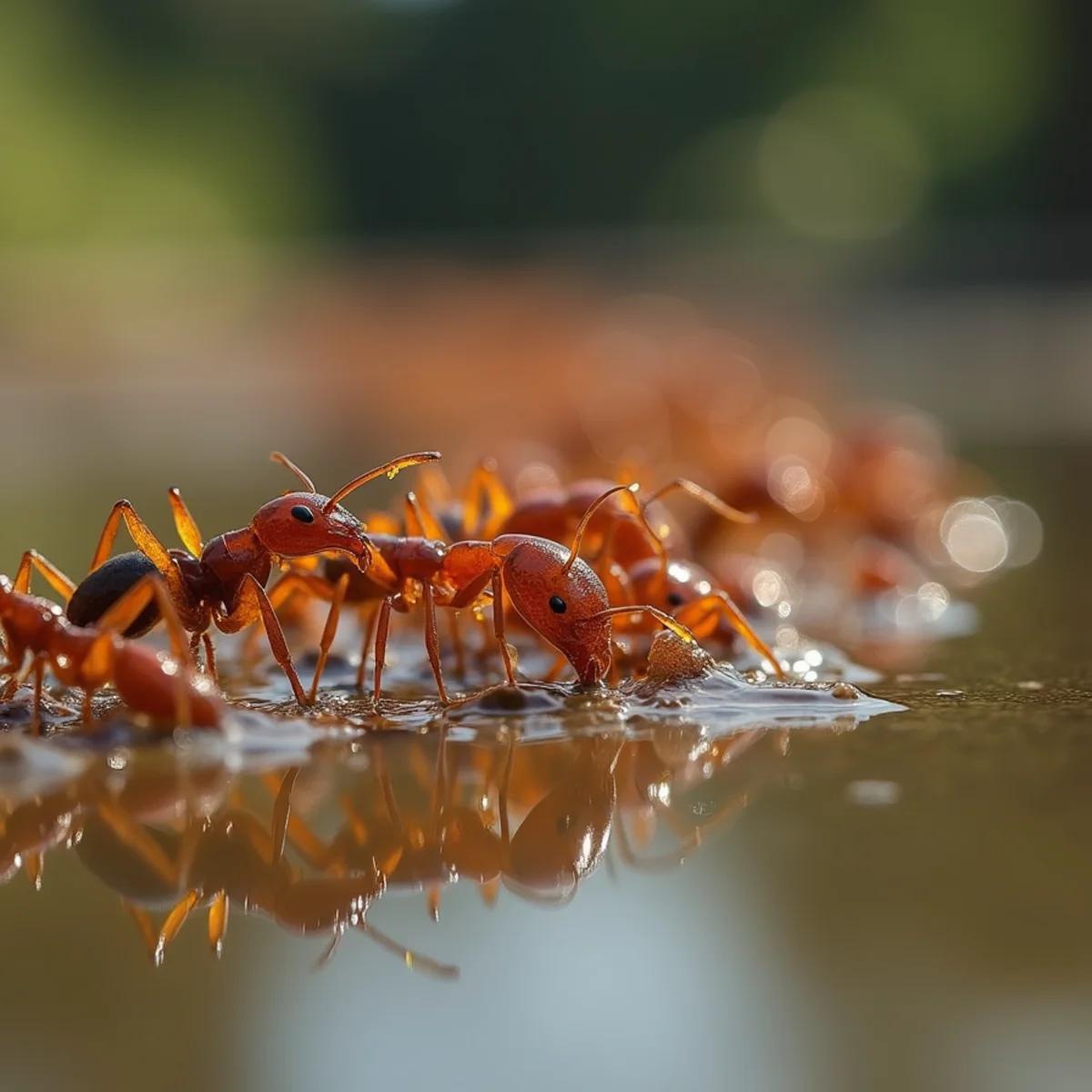
- Floating Fire Ant Hydro-Rafts: Red imported fire ants (Solenopsis invicta) possess a unique survival mechanism. As water inundates their subterranean mounds, worker ants interlock their mandibles and tarsal claws to weave a living waterproof raft. The queen and brood are safely positioned in the center above the waterline. These living ant rafts drift across floodwaters and cling violently to any floating object they encounter—including waders, boat hulls, porch steps, or rescuing homeowners—inflicting hundreds of simultaneous venomous stings.
- Displaced Roof Rats & Field Mice: Subterranean rat burrows along drainage ditches flood instantly. Roof rats (Rattus rattus) are adept swimmers that climb brick veneers, exterior plumbing pipes, and overhanging tree branches to colonize dry attic crawl spaces, ductwork, and ceiling insulation.
- Venomous Pit Vipers: Copperheads and western cottonmouths (water moccasins) native to San Jacinto bottomlands are displaced by swift currents. Frightened and seeking warmth, they frequently shelter under soaked porch rugs, inside flooded ground-floor base cabinets, or beneath water-damaged drywall debris piles.
- American & Smokybrown Cockroaches: Houston's municipal storm sewers and municipal drainage lines are prime breeding grounds for large cockroaches. When sewers back up with storm surge, millions of roaches exit through floor drains, toilets, and foundation weep holes into residential interiors.
Need Immediate Guidance for Your Home?
Our local Humble coordination team is ready to answer questions and schedule on-site evaluations.
Structural Moisture Vectors: Subterranean Termites and Wood Rot

While immediate threats like snakes and ant rafts capture headline attention, the secondary biological surge of wood-destroying organisms poses the greatest long-term financial hazard to flooded homes.
Subterranean and Formosan termites are moisture-dependent insects. When floodwaters submerge concrete foundations and soak wall framing, the moisture content of structural 2x4 studs and bottom plates surges from a normal 8% to 12% to over 30%. Saturated framing emits fungal cellulose cues that attract subterranean termite foragers from hundreds of feet away.
Furthermore, standard chemical perimeter soil treatments (termiticide barriers) can be physically washed away or displaced by feet of rushing floodwaters and thick deposits of alluvial mud. Flooded homes must undergo a complete re-inspection and termiticide reinforcement once framing dries.
The Post-Flood Mosquito Explosion: Floodwater vs. Standing Vectors
Post-flood mosquito emergence in Humble and Kingwood occurs in two distinct, predictable entomological phases:
Phase 1: Floodwater Mosquitoes (Days 3 to 10): Species such as Psorophora columbiae (the dark rice field mosquito) and Aedes vexans lay millions of drought-resistant eggs in low-lying pasture and woodland depressions. When floodwaters cover these egg beds, trillions of larvae hatch simultaneously. These large, aggressive mosquitoes swarm in daylight and inflict painful bites, making outdoor recovery work virtually impossible without professional barrier misting.
Phase 2: Disease Vectors (Weeks 2 to 6): As floodwaters recede into stagnant roadside ditches, retention ponds, and clogged gutters, Culex quinquefasciatus (the southern house mosquito) takes over. Culex mosquitoes breed prolifically in organically polluted, stagnant standing water and serve as the primary local vector for West Nile virus and St. Louis encephalitis.
Comprehensive Post-Flood Remediation & Pest Defense Action Plan
To secure a flooded home against secondary pest devastation, homeowners and contractors should follow this step-by-step recovery protocol:
- Execute the 4-Foot Flood Cut: Remove all flood-damaged drywall, fiberglass batt insulation, and baseboards at least 12 to 24 inches above the high-water line to allow structural framing to dry below 15% moisture content.
- Apply Borate Termiticide to Exposed Studs: Before installing new insulation and sheetrock, spray bare wooden framing with disodium octaborate tetrahydrate (Bora-Care). This provides lifetime structural protection against termites and dry rot fungi.
- Inspect and Clean Weep Holes: Flood silt and mud frequently clog foundation weep holes. Flush out silt and install stainless steel weep hole screens to keep rodents and roaches out of drying wall cavities.
- Empty and Treat Stagnant Ground Pools: Apply biological mosquito dunks containing Bacillus thuringiensis israelensis (BTI) to standing water in ditches, swimming pools, or drainage swales that cannot be immediately pumped.
- Schedule an Exterior Perimeter Barrier Reset: Once soil around your foundation dries, have a licensed pest professional trench and rod non-repellent termiticide (Termidor SC) to re-establish the chemical barrier washed out by flood currents.